2025 Capital Gains Tax Guide for Home Sellers | Maximize Your Savings
Capital Gains Tax on Real Estate: What 2025 Sellers Need to Know
Introduction
As home prices continue their upward climb in 2025, more homeowners are bumping into a little-known but impactful financial hurdle: the capital gains tax on real estate sales. Originally designed to apply to high-earning sellers, this tax is now affecting a growing number of average homeowners—particularly in hot real estate markets such as California, Washington, and Hawaii.
Recent discussions at the federal level have reignited the debate around whether capital gains exclusions should be raised—or eliminated altogether. Some policymakers argue that outdated thresholds are discouraging homeowners from selling, thereby compounding inventory shortages across the country.
What Is Capital Gains Tax on Real Estate?
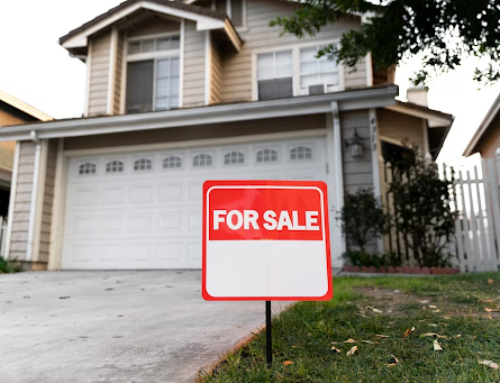
When you sell a home for more than what you paid, the difference is considered a capital gain. The IRS may tax that gain, depending on how much profit you make and how long you lived in the home.
Fortunately, there’s an exclusion limit that protects a large portion of most homeowners’ profits from taxation. As of 2025:
- Single taxpayers can exclude up to $250,000 in profit from the sale.
- Married couples filing jointly can exclude up to $500,000.
To qualify, you must have:
- Owned and lived in the property for at least two out of the last five years before the sale.
- Used it as your primary residence.
Why the Capital Gains Tax Is a Bigger Deal in 2025
What was once a tax concern primarily for luxury property owners is now creeping into middle-class territory. Thanks to decades of steady appreciation—especially in metro areas—homeowners are more frequently crossing the $250K/$500K threshold and becoming subject to taxes on their gains.
According to the National Association of Realtors (NAR), over one-third of current homeowners could owe capital gains taxes if they sold today.
In response, legislators on both sides of the aisle are pushing for reform. Representative Marjorie Taylor Greene (R-GA) proposed eliminating the tax altogether. Meanwhile, Representative Jimmy Panetta (D-CA) introduced a bill that would double the exclusion limits to $500,000 for individuals and $1 million for couples, with automatic inflation adjustments moving forward.
Who’s Affected the Most?
While any homeowner can be impacted, the capital gains tax hits hardest in high-cost states, where long-term homeowners may see massive increases in home value even without extensive upgrades.
A 2024 analysis from Cotality found that:
- Nearly 29% of home sales in California during Q4 2023 exceeded the $500,000 exclusion.
- In Hawaii and Washington, D.C., more than 20% of sellers also surpassed the limit.
How Much Is the Tax?
If your home sale results in profits that exceed the exclusion threshold, the amount you’ll owe depends on your income and filing status:
Capital Gains Tax Rates for 2025:
- 0% for individuals earning under $47,025 (or $94,050 jointly)
- 15% for individuals earning between $47,025–$518,900 (or $94,050–$583,750 jointly)
- 20% for incomes above those thresholds
How Capital Gains Tax Impacts the Real Estate Market
Experts believe that capital gains taxes are discouraging sellers from listing their homes—especially retirees or those looking to downsize. Faced with a potential six-figure tax bill, many homeowners choose to stay put, exacerbating the already limited housing inventory in competitive areas.
Ken Johnson, a real estate economist, says that adjusting the capital gains tax thresholds could stimulate more listings, adding much-needed supply to tight markets. He also notes that while an increase in listings could ease prices, it could also spur demand and create additional competition.
Strategies to Reduce Your Capital Gains Tax Exposure
If you’re a homeowner considering selling, here are some ways to reduce or eliminate your potential capital gains tax:
1. Maximize Your Exclusions
Ensure you meet the 2-out-of-5-year rule to qualify for the $250K/$500K exemption. If you don’t yet qualify, consider delaying your sale until you do.
2. Include the Cost of Home Improvements
Increase your cost basis by including qualified improvements:
- Room additions
- Decks and patios
- Kitchen or bathroom remodels
- HVAC replacements
- New roofs or windows
3. Account for Selling Expenses
Deduct closing costs and fees from your capital gains calculation:
- Realtor commissions
- Title insurance
- Transfer taxes
- Escrow fees
What Could Change in the Near Future?
As of mid-2025, several bills are under review in Congress that could reshape how capital gains tax applies to home sales. These include:
- Doubling the exemption amounts
- Indexing thresholds to inflation
- Eliminating the tax entirely for primary residences
The National Association of Realtors continues to lobby for updates to ensure capital gains exclusions reflect today’s economic conditions.
Conclusion
The capital gains tax on real estate is no longer a concern only for the wealthy. With soaring home values in 2025, even average homeowners may be subject to significant tax obligations. Understanding how the tax works and using available strategies to reduce your exposure can help you keep more of your equity when it’s time to sell.
Consult with a trusted real estate agent and tax professional to review your options and stay informed about potential changes in the law that could work in your favor.